How to choose the right house construction technology: a guide for investors
Introduction
House construction technology – why does it matter?
Deciding to build a house is one of the most important investments of your life. Choosing the right construction technology is a key step that affects living comfort, running costs and the future value of the property. The construction technology also determines how long the project takes, the cost of the build and how easily the space can be adapted to the changing needs of the household. Understanding the available options is the first step towards an informed decision that meets your needs and expectations.
Aims of this guide
This guide has been written for investors who are choosing a construction technology. We will look at the available options, discuss the selection criteria and point out what to consider in terms of local conditions. With this guide you will find out which construction technology best suits your needs and how to avoid the most common mistakes made during a building project.
1. Understanding the available construction technologies
Choosing a house construction technology is not easy. Below you will find an overview of the most popular solutions, together with their advantages and limitations.
Traditional technology (see our offer)
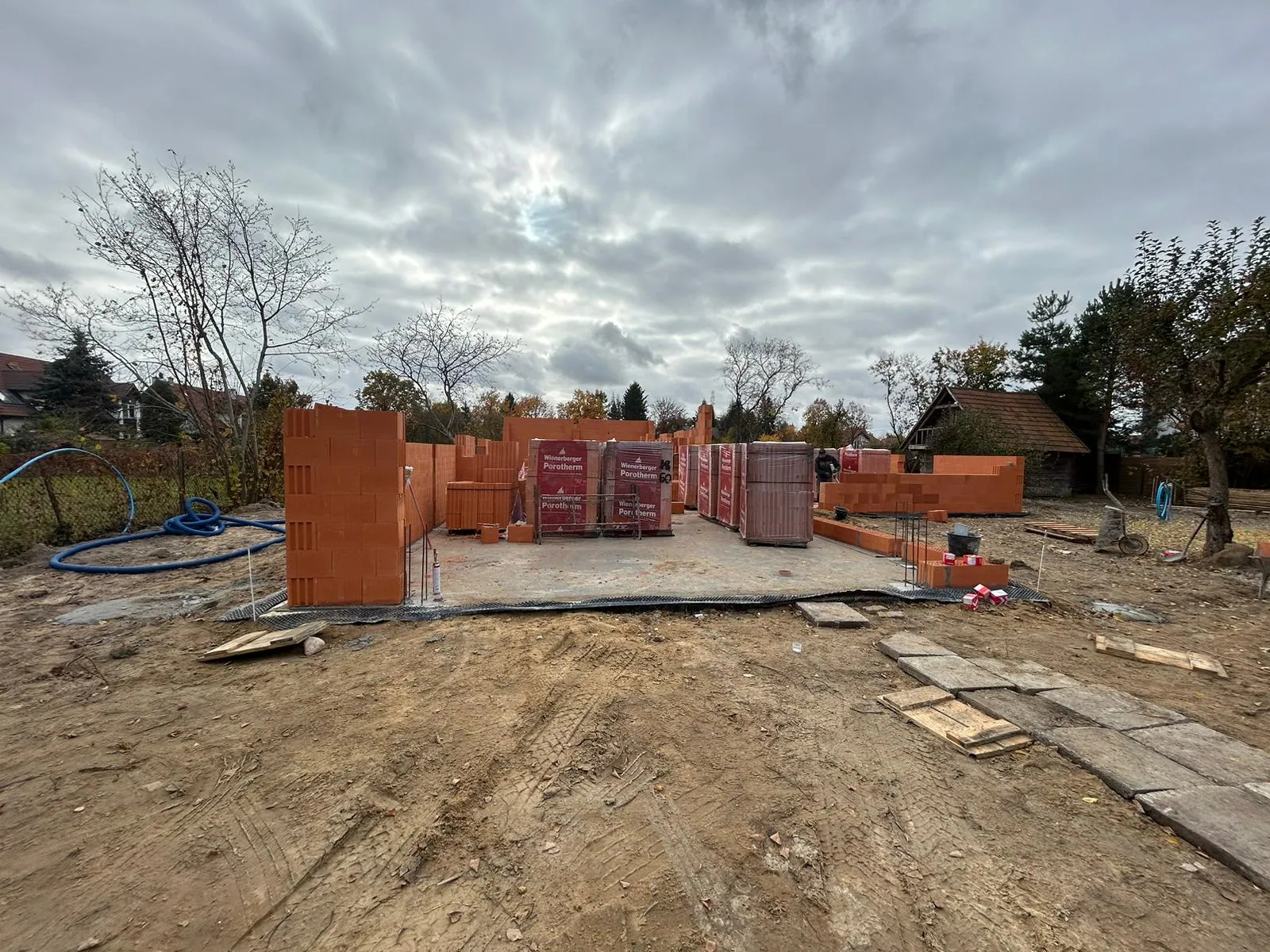
Traditional construction is based on materials such as brick, concrete and stone. Houses of this type are highly durable, resistant to changing weather conditions and have low noise transmission. However, the construction time is longer and costs can be higher, especially when the design is highly customised.
Timber-frame technology (see our offer)
Timber-frame technology (often called the Canadian method) is growing in popularity thanks to its short construction time and lightweight structure. Timber-frame houses perform well in a temperate climate because they are easy to insulate. They are more sensitive to temperature changes, so in colder regions they may require additional thermal insulation measures.
Prefabricated technology
Building with prefabricated elements is a way to shorten the project timeline. The components of the house are made in a factory and assembled on site. This technology allows work to progress quickly, which can be an advantage for investors who want to move in soon. Prefabricated elements also offer high precision, but they require detailed designs and a higher technical standard.
Modular technology
Modular construction is similar to prefabricated technology, but involves assembling larger elements that form entire rooms. The modules are built in factories and transported to the building site, which shortens construction time and makes later extension easy. The downside of this technology is the limited scope for customisation – the available modules must conform to standard transport dimensions.
2. Criteria for choosing a construction technology
Every investor has different priorities. Below we set out the most important criteria worth considering when choosing a house construction technology.
Project budget (see how much it costs to build a house)
Each technology involves different costs. Traditional construction can be more expensive where non-standard solutions are involved, while prefabricated technology offers controlled costs but is less flexible. Investors on a limited budget may consider timber-frame technology, which can save money at the construction stage.
Construction time requirements
Time is an important criterion, especially for those who want to move into their own home quickly. In that case it is worth considering prefabricated or modular technologies, which shorten the project timeline.
Energy efficiency
More and more investors are paying attention to energy efficiency, which translates into running costs and thermal comfort. Traditionally built houses can offer excellent thermal insulation, as can some prefabricated houses, provided the right insulation materials are used.
Customisation options
For people with a clear vision of their future home, design flexibility can be crucial. Traditional technology allows a high degree of customisation, while prefabricated elements and modules may limit design options because of the standard sizes of their components.
3. Analysis of local building conditions
Local building conditions can influence the choice of technology. Before you make a decision, it is worth analysing a few factors.
Building regulations
Regulations may set minimum requirements for the structure, insulation or type of materials, so before choosing a technology it is worth consulting a construction expert who knows the local standards.
Ground conditions
Ground conditions have a significant impact on the choice of foundations and the technology as a whole. For example, timber-frame houses need to be properly founded on the ground to ensure the stability of the structure.
Climatic conditions
The climate in the region where you plan to build may determine the choice of technology. In regions with low temperatures or high humidity, traditional technology may prove more durable, whereas in warmer climates timber-frame structures are often sufficient.
4. Consulting the experts
Expert knowledge is support that can protect an investor from mistakes and help optimise costs. The key specialists worth consulting are:
Architects
An architect will help design a functional interior layout and advise which technology will best meet your aesthetic and practical needs.
Structural engineers
Engineers can assess the stability of the structure, advise on materials and take into account aspects such as energy efficiency, durability and safety.
Construction companies
Contacting a construction company will allow you to estimate realistic costs and timescales, and to identify potential difficulties on site.
5. Examples of different technologies in use
To better understand how different technologies perform in practice, it is worth looking at specific examples.
Case study: building a traditional house
A traditional house in an area with harsh climatic conditions – high initial costs, but excellent thermal insulation and longevity.
Case study: building a timber-frame house
A timber-frame house on a plot with average ground conditions – fast construction and affordable costs, but additional insulation measures required.
Case study: building a prefabricated house
A prefabricated house on a flat plot – short construction time, a stable structure and moderate running costs, but limited scope for customisation.
6. Summary and recommendations
The most important factors to consider
Choosing a construction technology is a decision that will affect your comfort and running costs for years. Remember to take into account your budget, the timescale, energy efficiency, and local building and climatic conditions.
Final advice for investors
Before making a final decision, consult the experts and try to define your needs and priorities as precisely as possible. It is also worth taking a flexible approach – sometimes a compromise between construction time, cost and quality brings the best result.
tags: house construction technology, house construction technologies, building a house – which technology?, building a house: how to start, technologies for building houses, which house to choose?